
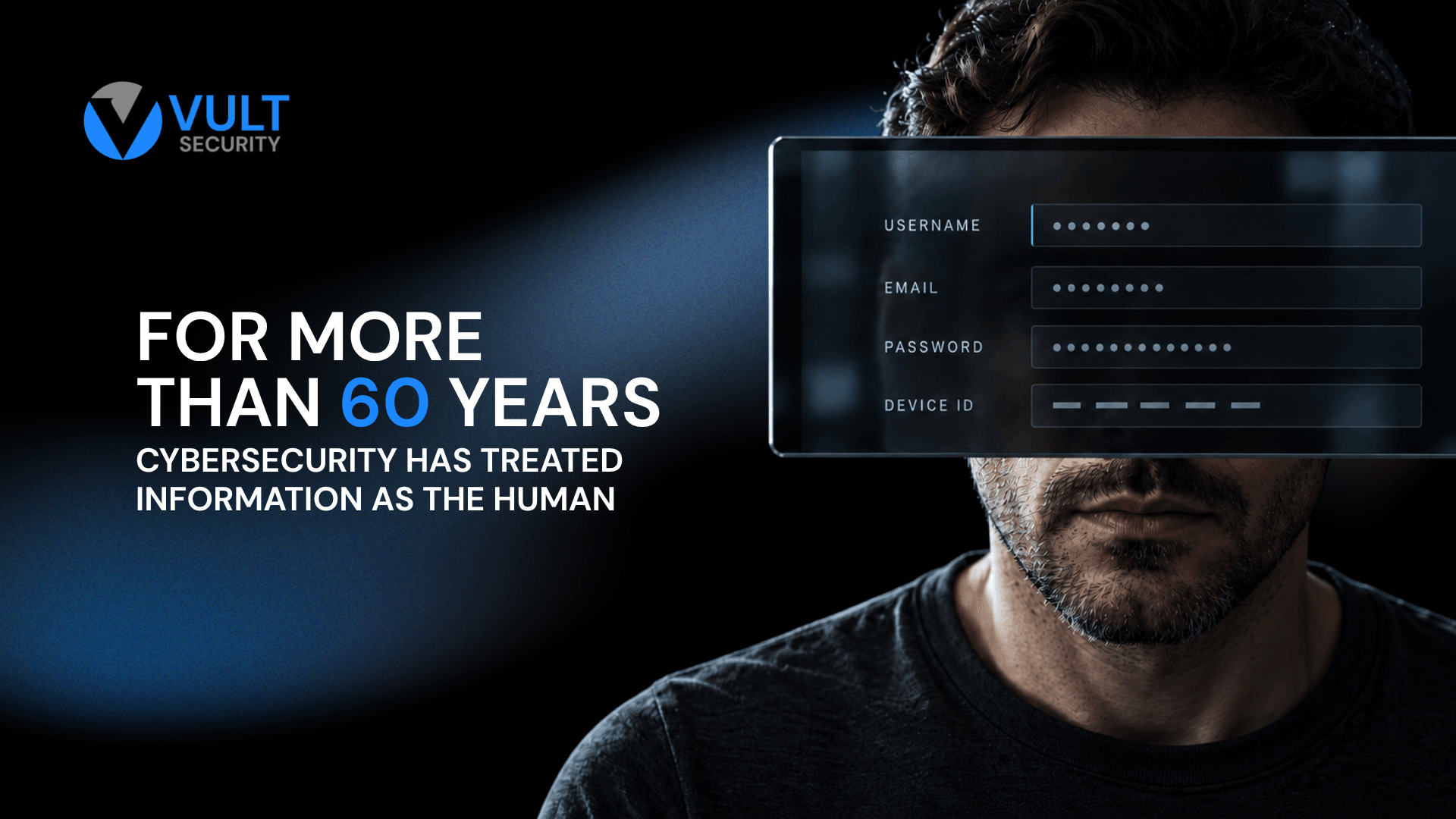
A system can accept a valid credential, follow its access rules and still leave an organization unable to answer a consequential question: did the person whose name is on the account authorize what just happened? When money moves, records leave a system or someone’s permissions change, a successful login is only part of the story.
The roots of that distinction reach back to the beginning of shared computing. MIT’s Compatible Time-Sharing System, first demonstrated in 1961, helped establish individual accounts protected by passwords. It was an ingenious response to a practical need: let people share a computer while keeping their work separate. MIT’s account of Fernando Corbató’s work traces that history to the early 1960s.
More than six decades later, much of digital life still depends on accepting something associated with a person as evidence that the person is acting. The evidence has become considerably stronger. The unresolved question appears when an organization treats that evidence as sufficient proof that a specific human is present and personally authorizing a particular action.
At VULT Security, that is the distinction we address. A protected event requires fresh verification of the living person linked to a government-issued ID, followed by their explicit authorization of the exact event. The organization can establish more than the validity of an account’s access. It can establish evidence of the human exercising it.
The Compromise That Became the Default
A password was never the person. It was a secret associated with an account. The same distinction applies to other authenticators: their purpose is to provide evidence that a system can evaluate, with different methods offering different levels of assurance.
NIST’s authentication guidance describes authentication as verifying that a claimant controls one or more authenticators associated with a subscriber account. That is a defined security function. It should not be casually expanded into a claim that every subsequent action reflects the account holder’s personal authorization.
Consider an employee who signs in at the start of the day. That sign-in can establish an authenticated session. It does not, by itself, establish that the employee reviewed and authorized every later instruction sent through that session. A legitimate automated process, an overprivileged integration or an unauthorized actor may operate through access associated with the same account.
For consequential events, organizations need to distinguish between permission available to an account and authorization exercised by the human who holds it.
What the System Checks, and What Still Needs to Be Established
The gap becomes easier to see when familiar security mechanisms are separated from the conclusions organizations sometimes draw from them.
Security mechanism | What a successful check establishes | What it does not establish by itself |
Password or PIN | The expected secret was supplied | Which human supplied it |
One-time code | A valid code was presented | That the rightful person personally authorized the action |
Authenticator application | The enrolled mechanism produced an accepted response | The government-ID-linked person’s authorization of this event |
Recognized device | The device satisfied the organization’s recognition checks | Who is operating it now |
Device biometric | A locally enrolled biometric passed the device’s check | A match to the organization’s verified legal identity |
Bearer token | An accepted token was presented within its permitted scope | The account holder’s current participation |
Active session | The system accepted the session as valid | The human’s personal authorization of each later action |
Email or phone verification | The required channel-based check was completed | A verified legal identity or event-specific authorization |
Device biometrics illustrate why these distinctions matter. The WebAuthn specification explains that local user verification does not give the service a concrete identification of the user. It also acknowledges that more than one natural person may have access to an authenticator.
A biometric factor remains “something you are” in the established MFA model. But that classification does not automatically bind the enrolled biometric to a validated government-issued ID, or bind its use to the person’s authorization of a particular external action.
The issue is what the organization concludes from the result. A successful local check can be valuable without answering every question about the human behind it.
Stronger Authentication Still Leaves an Authorization Question
Security has advanced substantially since the first shared computers. Phishing-resistant authentication, secure hardware, stronger recovery procedures and carefully enforced access policies can prevent attacks that weaker methods allow.
Those improvements should remain part of the conversation. Treating every password, one-time code and passkey as equally vulnerable would obscure meaningful engineering progress. NIST distinguishes those methods and their protections in its authentication requirements.
The additional requirement is narrower: when a particular action needs a particular human’s authorization, establish that authorization for that action.
An administrator’s ability to sign in should not silently become evidence that the administrator directed every command associated with the account. A customer’s access to a payment application should not be the entire evidentiary basis for saying the customer authorized a disputed transfer.
Organizations need both sound access controls and a reliable connection between the human and the consequential event.
The Credential Can Fail Somewhere Else and Still Hurt You
An organization can secure its own systems while remaining exposed through access granted to another service. Integrations, vendors, browsers, endpoints and recovery processes all influence how an account’s permissions can be exercised.
Google’s investigation of the 2025 Salesloft Drift campaign provides a concrete example. Attackers used compromised OAuth tokens associated with the third-party application to access Salesforce customer instances. Google later confirmed access to a small number of Google Workspace accounts specifically connected to the Drift Email integration. Google stated that Google Workspace and Alphabet themselves had not been compromised. Google Threat Intelligence Group’s investigation documents the distinction.
The lesson is practical. A platform does not have to suffer a direct compromise of its core infrastructure for an attacker to misuse access to accounts hosted on it. The compromised integration can carry permissions the platform was configured to accept.
The widely reported credential datasets of June 2025 illustrate another part of that exposure. The Associated Press reported researchers’ discovery of 30 datasets totaling an estimated 16 billion credential records. The number described records, not 16 billion unique people.
These were compiled records, not evidence of one breach of Apple, Google and Meta. The Guardian’s reporting provides additional context.
The broader concern is where account access can be lost. A secret stolen from a person’s browser or device may later be presented to a service that has no fresh evidence of that person’s participation.
What the Mythos Reports Established
In April 2026, Reuters reported allegations of unauthorized access to Anthropic’s Claude Mythos Preview through a third-party vendor environment. Anthropic said it was investigating. TechCrunch also described a contractor connection.
Those reports did not establish stolen administrator credentials as the cause. They belong in a discussion of third-party access, with that distinction intact.
For security leaders, the operational question is still relevant: how far does a trusted relationship extend, and what must be independently established before someone can use it for a consequential action? A vendor relationship and an available access path should have clearly enforced limits.
AI Makes Impersonation Easier to Scale
The FBI has documented criminals using generated text, fabricated images, cloned voices and synthetic video to support fraud. These tools can reduce the effort required to impersonate someone and make a fraudulent interaction more convincing.
That changes the environment around authentication. A help desk may hear a familiar voice. An employee may receive a polished request apparently written by an executive. A customer may be drawn into a realistic conversation that leads them to disclose information or authorize access.
A separate Google investigation into voice phishing documented attackers impersonating IT support and persuading employees to grant malicious applications access to Salesforce data. That report establishes the social-engineering pattern; it does not establish that those calls used AI-generated voices.
Together, these sources show why the distinction matters. Criminals already exploit human trust to obtain technical access, and generative AI gives them additional ways to make impersonation persuasive. Once access is obtained, a system needs a defined way to determine which actions still require the verified person’s direct participation.
A familiar communication channel, a convincing message or an accepted credential should not be the final word on who authorized a consequential event.
Identity Verification Must Remain Useful After Enrollment
Identity verification addresses an essential question: does the applicant belong to the identity being claimed? NIST’s identity-proofing guidance separates validating identity evidence from verifying that the applicant is its rightful owner.
That connection should remain useful throughout the relationship. If a bank verifies a customer when an account opens, it should be able to establish that the same person is present when a protected transfer occurs months later. An employer should be able to verify the administrator exercising sensitive privileges after the original hiring and enrollment process.
Repeated document submission is not necessary for every event. What matters is continuity between the identity established earlier and the live person acting now.
Security approach | Evidence available | Question at the protected event |
Credential-based account access | An accepted authenticator or session | Is the associated human personally participating now? |
Identity verification at enrollment | An identity established when the relationship began | Is that same verified person exercising the account’s permissions? |
Verified-human authorization | Fresh identity matching, real-time presence and authorization tied to the event | Does this authorization cover the exact action about to occur? |
These capabilities can work together. Enrollment establishes the identity, account systems manage the relationship, and verified-human authorization establishes the person’s participation when the organization requires it.
No Substitution for the Human
At VULT Security, No substitution for the human means that account access alone cannot satisfy a protected event’s requirement for verified-human participation.
VULTid enrollment begins by validating a government-issued identity document, matching the live person’s face to its portrait and applying liveness detection. The verified identity is bound to a protected biometric template for future comparison.
Every protected authorization requires a fresh live capture, real-time liveness detection, Proof-of-Presence and server-side matching to that established identity. The person ordinarily does not need to scan the identity document again. They must demonstrate that they are the same living person linked to it.
The organization determines which events require that assurance. Once it protects an event this way, an earlier login, an active session or the phone’s local biometric enrollment cannot satisfy the requirement on its own.
The person then explicitly authorizes the action presented. VULT Security connects:
Verified identity + real-time human presence + the specific event + explicit human authorization.
At VULT Security, we call this Event-and-Identity-Bound Authorization: binding a verified human’s identity and real-time presence to their authorization of one specific action, supported by a protected evidence record.
Five Decisions That Change What Must Be Proven
1. Verify the Person When the Event Occurs
The human check happens when the protected event requires it. Trust from enrollment or an earlier session does not remove the requirement for fresh participation.
2. Match Against the Established Identity
VULT Security performs the comparison server-side against the protected reference associated with the verified VULTid. Replacing a phone or changing its local biometric enrollment does not change the person associated with that reference.
3. Require Real-Time Proof-of-Presence
The workflow requires a fresh live capture and liveness evaluation. Its purpose is to distinguish current human participation from a photograph, recording or previously captured biometric, alongside the protections needed for the capture and verification process.
4. Maintain the Government-ID Binding
The comparison refers back to an identity established through document validation and live face matching. The organization is requesting confirmation of that verified person, rather than relying solely on a self-asserted profile or locally enrolled device user.
5. Bind Authorization to the Exact Event
The verified person sees the material details and explicitly authorizes that action. The resulting authorization is single-use and event-specific. A change to the destination, amount, recipient, instruction or other material detail requires a new authorization.
The value comes from enforcing these requirements together. A biometric match alone should not become permission for an unspecified sequence of actions.
Permission Belongs to the Organization
The organization decides which accounts exist, what those accounts can do and whose authorization is required. VULT Security verifies the human exercising those permissions.
A person can have permission to move funds without having authorized the transfer currently being requested. An administrator can have permission to change a system without having directed the command about to run. Those are separate facts, and a protected workflow should establish both.
For a wire transfer, the event includes the relevant accounts, destination and amount. For a records disclosure, it includes the information and recipient. For an AI-directed operation, it includes the defined action and its permitted scope.
The executing system must validate the authorization, check current permissions and enforce the event details before acting. OWASP’s transaction authorization guidance supports the broader principle: distinguish authentication from transaction authorization, make the action clear to the user and enforce authorization on the server.
Permission allows the action. VULT Security establishes evidence that the verified human authorized it.
A Protected Event Requires More Than Account Control
This changes the usefulness of stolen access. A password, intercepted code, hijacked session or compromised token may still create serious exposure elsewhere, but none alone satisfies a workflow that requires fresh verification and event-specific authorization from the human.
That requirement must exist at the point where the system executes the action. An application cannot require verified-human authorization through its main interface while leaving another route to the same protected operation unchecked.
For AI systems, the distinction is especially useful. An agent can prepare an instruction, assemble supporting information or propose an account change. Where policy requires the person’s authorization, execution waits for the verified human to review and authorize the defined event.
The organization retains its fraud controls, risk policies and operational judgment. Verified-human authorization adds a specific barrier against someone exercising a person’s permissions merely because they obtained access associated with them.
Protect the Identity Without Keeping Every Image
Stronger verification should also be deliberate about what it retains. By default, VULT Security does not store face photographs, face videos or government-issued ID images.
The process validates the ID, matches the live person to its portrait and binds the verified identity to a non-reversible biometric template. That protected template is retained for future comparisons; the original images are not retained by default.
Original face photographs, videos or ID images are stored only when an organization explicitly requests that retention, such as a financial institution requesting ID images for its recordkeeping.
The template remains biometric data and is protected accordingly, using homomorphic encryption and rotating keys. NIST’s explanation of homomorphic encryption describes the underlying principle of computing on encrypted data.
An organization can receive the verification result and relevant authorization evidence without maintaining its own biometric template repository. The aim is to provide the assurance required for the event while limiting unnecessary possession of the person’s underlying identity information.
Accountability Needs More Than an Account Name
When an event is disputed, an account identifier and timestamp may leave essential questions unanswered. What was presented to the person? Was the verified human present? Which action did they authorize?
VULT Security’s protected evidence record connects the verified identity, real-time presence, event details and authorization. The record can support investigation and traceability by preserving evidence of who authorized what. The organization can also connect it to its execution records to examine what happened afterward.
This is the practical purpose of authorization accountability. The organization has a basis for examining the human’s participation rather than inferring it solely from account activity.
The Next Era Must Make Human Authorization Explicit
The next era of identity security should make a clear distinction between the permissions a system holds and the human decision required to use them. That distinction becomes more valuable as we voluntarily give software and AI agents more work to do on our behalf.
Actions that can materially affect a person financially, legally, reputationally or physically deserve a deliberate decision about whose authorization is required. Sometimes that is the individual affected. Sometimes it is an employee, clinician, guardian or representative whose permission or legal role has been established separately.
Across participating organizations, requiring verified-human authorization at those consequential moments can help reduce impersonation and unauthorized actions throughout the services people depend on. VULT Enterprise brings that requirement into organizational workflows while each organization retains its accounts, permissions and policies.
The standard should be clear: the right human is verified in real time, the authorization covers the exact event, and protected evidence connects the two.
A person’s digital access should not be enough to exercise their authority. When the consequences belong to the human, the authorization should be bound to them.


